Godzilla: Destroy All Monsters Melee Remastered Was Announced for PS5 With a 12-Monster Roster

Godzilla: Destroy All Monsters Melee Remastered was announced for PlayStation 5 with a November 3 release date, bringing a roster of 12 kaiju with markedly different strengths and weaknesses. The fighter guide makes clear that choosing a monster is about more than picking a favorite: some are built to close distance quickly, others to control it with projectiles, and several depend on managing limited energy.
That matters when selecting a character for a match. A durable fighter can absorb pressure while looking for an opening; a fast one may need to avoid trading hits altogether. The guide’s practical dividing lines are mobility, defense, reach, and how heavily a monster’s best moves draw on its energy supply.
Godzilla is the most straightforward starting point, but he isn’t the only balanced option. Players who prefer to keep opponents away can look to King Ghidorah or Mechagodzilla, while Anguirus and Orga reward a more committed approach to defense and grappling. The roster also includes specialists whose weaknesses are important to understand before relying on them.
Balanced choices and close-range pressure
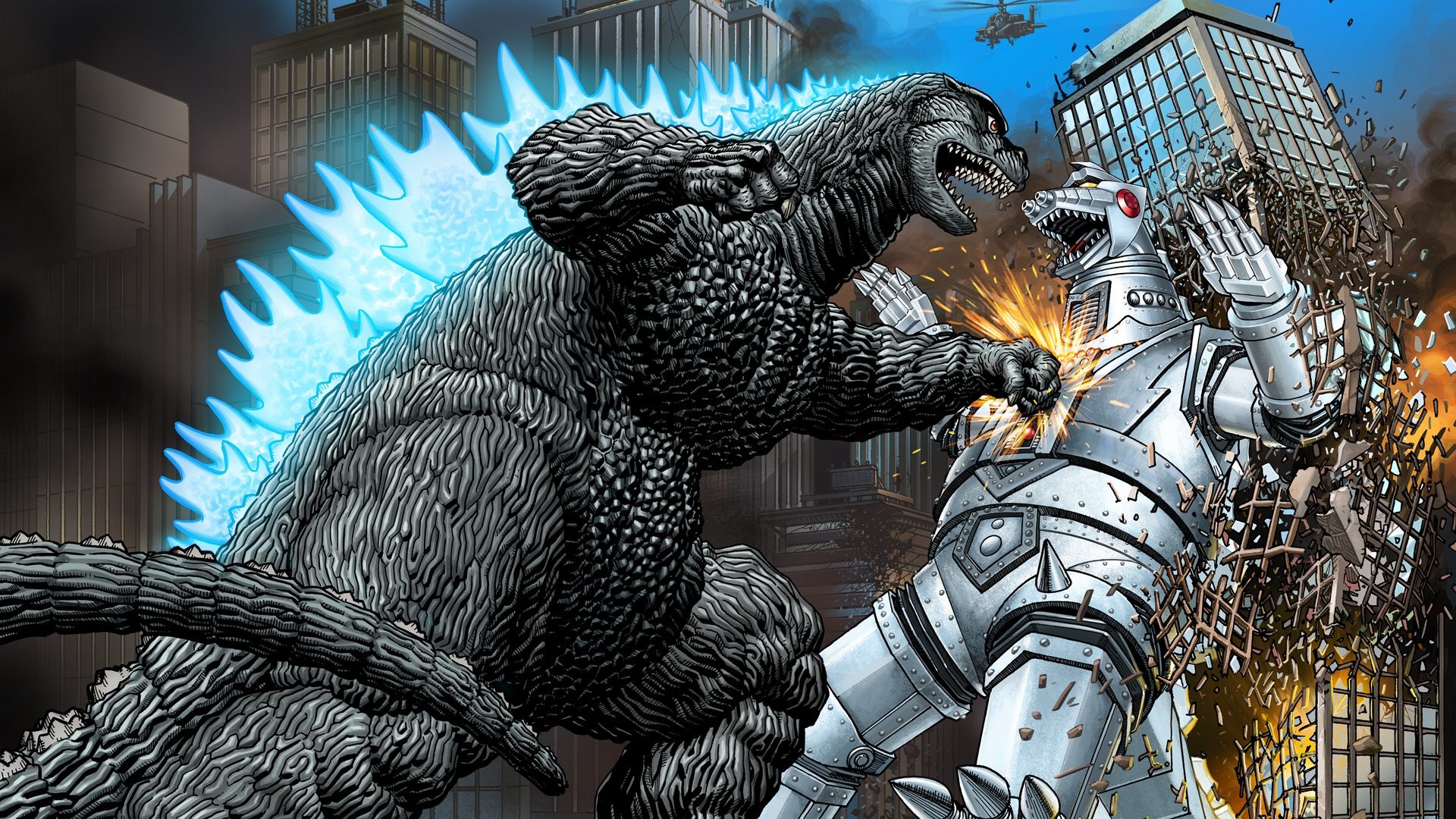
Heisei Godzilla is presented as the easiest place to start. His substantial starting health and solid all-around stats leave room for players to learn without having to build their entire approach around one unusual ability. His quick claws support effective melee combinations, and his tail gives him a useful strike when he has been knocked down.
His main drawback is that his most imposing tools can leave him exposed. The high-energy pulse takes time to charge, giving an opponent an opportunity to counter, while his projectiles are relatively slow. Godzilla is therefore not a character who can simply rely on ranged pressure: closing the gap matters against an opponent who can exploit that travel time.
Godzilla 2000 offers a similar all-round role with a slightly different balance. He is faster than Heisei Godzilla, but less powerful and more vulnerable. The guide describes him as an accessible alternative, so players who want a familiar, broadly capable style without using the default Godzilla have a clear option. His speed is a trade, not a straight upgrade; the lower strength means he gives up some of the resilience and force associated with his counterpart.
Gigan is a better fit for players who want to keep up a more aggressive pace. His speed, teleportation, and damaging hook attacks support rushdown, and teleportation gives him both reach and a way to evade danger. He can also mix melee with ranged attacks, making him less narrowly focused than a pure close-range fighter.
That flexibility has limits. Gigan’s Laser Eye is awkward to use, and energy attacks are a particular vulnerability. His speed and teleportation can help him get into position, but they don’t remove the need to watch what the opponent is using. Against energy-heavy pressure, charging in carelessly can turn his offensive strengths into a liability.
Rodan is the roster’s clearest speed specialist. The guide calls him the fastest monster and the most mobile in the air, with a strong breath attack and quick melee moves that suit hit-and-run play. Rather than stand and trade blows, a Rodan player can use mobility to attack and reposition.
That approach is essential because Rodan has very low durability and the weakest defense in the roster. His speed doesn’t make him a safe choice for prolonged close combat; it gives him a way to avoid the kind of exchanges he is poorly equipped to survive. Players who prefer direct, sustained brawling may find that mismatch frustrating.
Range, energy, and battlefield control
King Ghidorah is a slower, resilient zoning character. His projectiles let him keep rivals at a distance, making him a natural pick for someone who wants to shape where the fight happens instead of chasing an opponent. His airborne lightning blast needs no charge, which gives him a useful option while flying.
Flight does consume energy, however, and his enormous wings don’t make him a strong hand-to-hand fighter. His lack of arms and short legs leave him poorly suited to melee, so opponents who get inside his preferred range can put pressure on a significant weakness. Ghidorah’s value comes from controlling distance, not from being equally effective at every range.
Mechagodzilla leans even further toward ranged attacks and defense. Its extensive weapons include lasers, missiles, and a plasma cannon, and the guide says it has better defensive stats and more weapons than Kiryu. Its flying head-butt is another distinctive attack. Those tools make it a heavy-duty option for players who would rather attack from range than depend on ordinary close-quarters fighting.
The trade-off is energy dependence. Flying and many of Mechagodzilla’s ranged attacks consume energy, and once that resource is depleted, its grabs and slow melee are comparatively unimpressive. That makes energy management central to the character: spending freely can leave the machine without its main advantages when an opponent presses in.
Kiryu is another weapon-focused machine, but it is described as more balanced than Mechagodzilla. Its mix of armor and weapons makes it a choice for players seeking a more weapons-ready version of the base Godzillas, although that style is still energy-hungry. Kiryu’s Absolute Zero Cannon gives it a powerful rage attack, adding a notable burst of offense to an otherwise more even profile.
The contrast between the two machines is useful when choosing between them. Mechagodzilla is more specialized, with stronger defensive stats and a broader emphasis on weaponry; Kiryu trades some of that specialization for better-balanced attributes. Neither escapes the demands of energy use, so the decision is less about whether to use ranged tools than how much to build a fighting style around them.
Destoroyah combines high power with high costs. Its physical attacks hit hard, and it has a range of damaging energy attacks, many of which can’t be blocked. That gives it a strong mid-range presence and makes it a tank-like pick for players who want to threaten opponents with heavy attacks rather than rely on speed.
Its strongest abilities use a great deal of energy, and Destoroyah moves painfully slowly. Without energy available for those tools, the character can become much less effective. Players choosing it should weigh the impact of its big attacks against the risk of being left with limited options after spending too much of its resource.
Defense, grappling, and evasive tactics
Anguirus turns defense into a source of offense. He is quick and aggressive, but has low power and few long-range options, so the guide recommends treating him as a counter-attacker rather than trying to win a ranged exchange. His block takes time because of its turning animation, yet his back spines damage an opponent who attacks into it.
That defensive tool works alongside high defense and strong grappling, giving Anguirus a way to punish an opponent who commits to attacking him. He is not a long-range powerhouse, and his lower damage means he needs to make his defensive strengths count. Players who enjoy baiting attacks and answering them may find more to work with here than in a character built around raw power.
Megalon is designed around evasion and sudden attacks. Its tunnelling ability can avoid incoming attacks and let it emerge to grab an opponent, making it difficult to pin down. The move consumes energy, but using it alongside Megalon’s electricity attacks offers a way to alternate between disappearing from danger and striking back.
Megalon’s durability is below average, so the mobility is not just a flourish: it helps compensate for a weak defense. The guide’s advice is to keep moving rather than stand and absorb attacks. A player who lets Megalon get caught in a prolonged exchange may expose the character’s main weakness, while one who uses the tunnel to evade and create openings can make better use of its unusual kit.
Mecha-King Ghidorah combines ranged tools with grappling. It has less raw power than King Ghidorah, but its weapons are more useful overall, and the guide points to its versatility in grapples. A shield and projectiles with draining effects add further options, making it a different kind of choice from the original Ghidorah rather than simply a stronger version.
Like its counterpart, Mecha-King Ghidorah is slow, and its best attacks and shield depend on energy. A prolonged assault can leave it vulnerable, particularly if energy runs down before it can make use of those defenses. Players drawn to its long-range grappling should keep that resource limitation in mind rather than treating the shield as permanent protection.
Orga is the roster’s most dedicated grappler, with long reach from its huge hands that helps it in close and mid-range confrontations. The guide also notes its venomous maw and paralysing goo, giving it ways to threaten an opponent beyond simply reaching for a grab. Players who want to control a fight through grapples have a clear match in Orga.
Its reach comes with a slow pace, and blunt attacks can be less effective against opponents resistant to them. Fast enemies can also make grabs difficult to land. Orga’s paralysing goo can create an opening, but its high energy cost means a miss leaves the character exposed. That makes timing important: the move is most useful when it connects, not as a tool to throw out without regard for the cost.
Together, the profiles describe a roster with distinct ways to approach a fight: Godzilla offers a forgiving baseline, Rodan and Gigan bring speed, and the larger ranged fighters depend on spacing and energy. The announcement places Godzilla: Destroy All Monsters Melee Remastered on PlayStation 5 with a November 3 date; the fighter guide’s most useful distinction is how much each monster asks players to commit to one tactic, and what they give up in return.