Ghost of Yōtei explains how Most Wanted brought Jin Sakai back
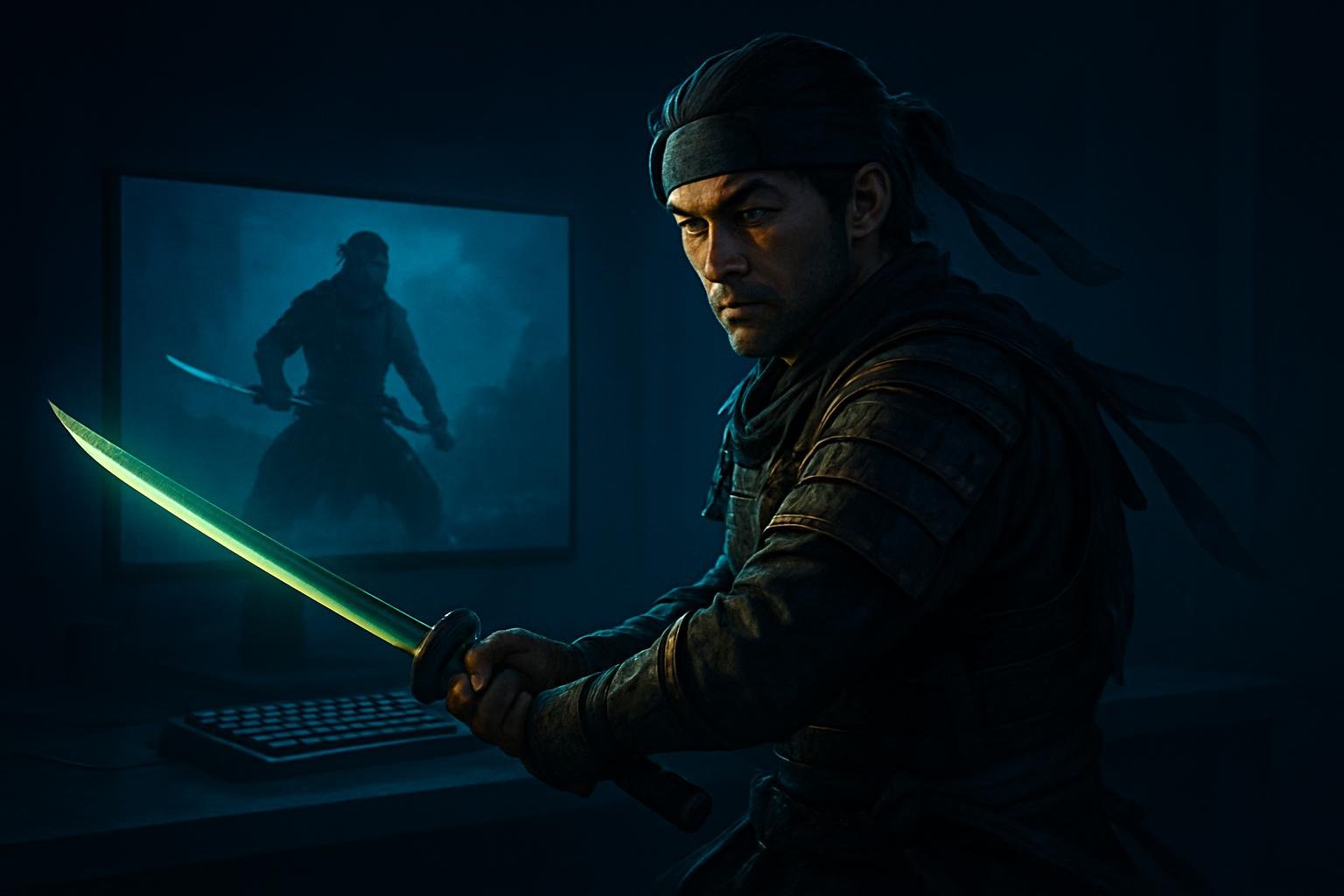
Jin Sakai returns as a playable fighter in Ghost of Yōtei’s Most Wanted mode, but bringing him into the newer game took more than importing his old character model. The developers say they adapted his combat, animations, appearance and sound to fit Yōtei, while preserving the details that make him recognizable from Ghost of Tsushima.
Most Wanted was designed as a replayable, class-based roguelike focused on combat challenge and mastery. It gives players a way to build strength and practice particular approaches beyond the main campaign, and to fight from perspectives other than Atsu’s. Jin’s inclusion became part of that plan, but the team first tested the mode with other characters while working out what his return would require.
In a development account, Systems Design Lead Parker Hamilton describes an early playtest that made the team confront a choice: a limited version of Jin wouldn’t deliver the experience they wanted. If he was going to appear, the goal was to bring back the full character, including his recognizable tools and fighting styles. That meant creating new assets and adjusting his abilities to a combat system that had evolved since Tsushima.
Jin’s combat had to fit a different system
The work touched more than 60 of Jin’s attacks, many of which have bespoke finishing animations. Programmer Nate Slottow says those animations were retargeted to Yōtei’s character rig, revised and rebalanced. Stone Stance’s Piercing Strike was particularly powerful in its original form, so it had to be tuned for the newer game. The team also made custom strafe animations for each stance to support Yōtei’s Focus Attack model.
That adaptation matters because the mode isn’t simply presenting Jin’s old moves unchanged. His familiar style has to operate alongside the newer game’s mechanics. The developers wanted him to retain the feel of a practiced swordsman while giving players ways to use the defensive timing, stance changes and faster attacks that define his kit in Most Wanted.
One example is how Jin’s parries interact with enemies. In Ghost of Tsushima, a well-timed block could interrupt an enemy’s combo. Yōtei separates Parry Deflect from Parry Interrupt, so the team used Jin’s Rattling Parry perk to make successful parries inflict more Stagger damage and trigger interrupts more often. Other perks encourage Perfect Parry, keeping precision defense central to his playstyle rather than treating it as a decorative legacy feature.
His offense also draws on several parts of his older moveset. Stone Stance represents his formal training, while switching between katana stances and using Quickfire lets him mix in less conventional attacks. One perk specifically rewards following a Quickfire move with melee, creating a reason to link the two rather than rely on either in isolation. The developers also brought his connection with the wind into some perks, though the account doesn’t detail their individual effects.
The mode’s broader focus on replayable combat gives those systems room to matter. Most Wanted was conceived around challenge, improvement and experimenting with different combat perspectives; Jin’s package is built to support that format rather than just provide a familiar face. The source doesn’t lay out the mode’s full progression rules, but it does describe Jin’s perks as a way to shape how a run plays and reward mastery of his particular tools.
Small animation details help sell the return
The animation team revisited Jin’s idle actions as well as his attacks. One is the rarely seen “bird hold idle,” which the team placed in the character-selection menu. His selection animation also takes inspiration from the cinematic moment in Ghost of Tsushima when he first recovers the storm blade. These are menu details rather than combat upgrades, but they help establish that this is the same character before a player starts a run.
The developers also restored signature combat moves, including Heavenly Slash, Dance of Wrath and Ghost Stance. Jin’s iconic gestures were carried forward too: the quiet motion of pushing the tsuba with his thumb before a duel, and wiping blood from his blade after a kill. Those touches sit alongside the technical animation work, helping his new presentation keep recognizable rhythms and habits from the earlier game.
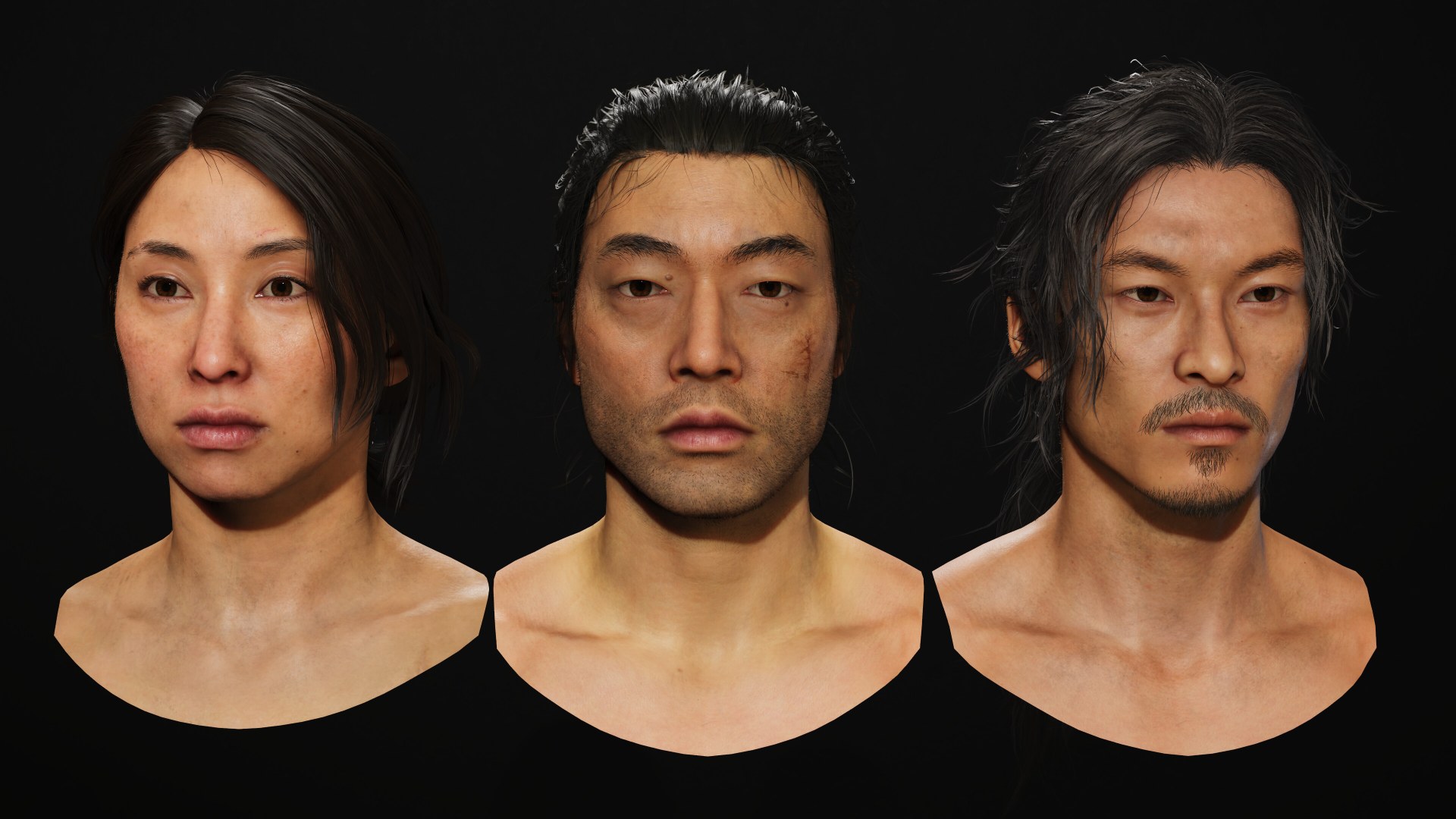
Jin’s armor provided a useful foundation for the visual update. Character Artist Nate Ramsey says much of the original model remained suitable, leaving the team to refresh its materials and detail for Yōtei. They used the old texture files as references for the metal, leather and cloth, then added subtle wear and age without changing the overall look players remembered.
His face and hair needed more careful adjustment. The artists used Tsushima’s textures as a base, then refined elements including skin tone, redness, lips and the scar, and created new normal maps to add skin detail. The aim was to bring Jin closer to Yōtei’s visual fidelity without altering his identity, and to make his appearance sit naturally beside Atsu’s. The production art director notes that Jin was originally made for PS4, while Yōtei was built for PS5, giving the team more room to add detail to his face, clothing, hair and armor.
Audio and voice work bring back familiar cues
The return also involved rebuilding Jin’s movement sounds. Between the two games, the audio team changed how character movement is handled, including the use of a more dynamic animation-tagging system. Sound designer Chris Walasek reworked recordings associated with Jin’s Ghost armor so they would fit the new system and keep the timing of his movement sounds consistent with the other characters.
Jin’s musical theme was revisited as well, with a new version recorded with Justin Johnson on lap steel guitar. The team also brought back sounds for signature attacks, including Heavenly Slash, Dance of Wrath and Ghost Stance. These pieces of the audio package were drawn from Tsushima material and adapted for the return, rather than being presented as a wholly new set of moves.
Daisuke Tsuji returned to voice Jin. Audio Director Rev. Dr. Brad Meyer says the team considered his performance essential to bringing the character into Most Wanted. Tsuji recorded confrontations with each member of the Yōtei Six, and the sessions also gave the team a chance to add a few Jin lines to the main game. The developer’s account does not specify which lines those are.
Most Wanted therefore gives Jin more than a cameo: players can take him through bounty runs with his stances, Quickfire attacks, parry-focused perks and signature abilities. The details described by the team show the tradeoff behind that return. Preserving the old character meant revising a substantial set of assets and tuning them for Yōtei’s systems, not simply dropping a familiar moveset into a new setting.
Access requires an internet connection, a PlayStation account and patch version 2.0 or later, according to the source’s note. The developers’ explanation is focused on Most Wanted and Jin’s implementation; it doesn’t provide further details about the mode’s progression or the availability of specific perks.