PlayStation Store’s 20th anniversary looks back at games that surprised developers
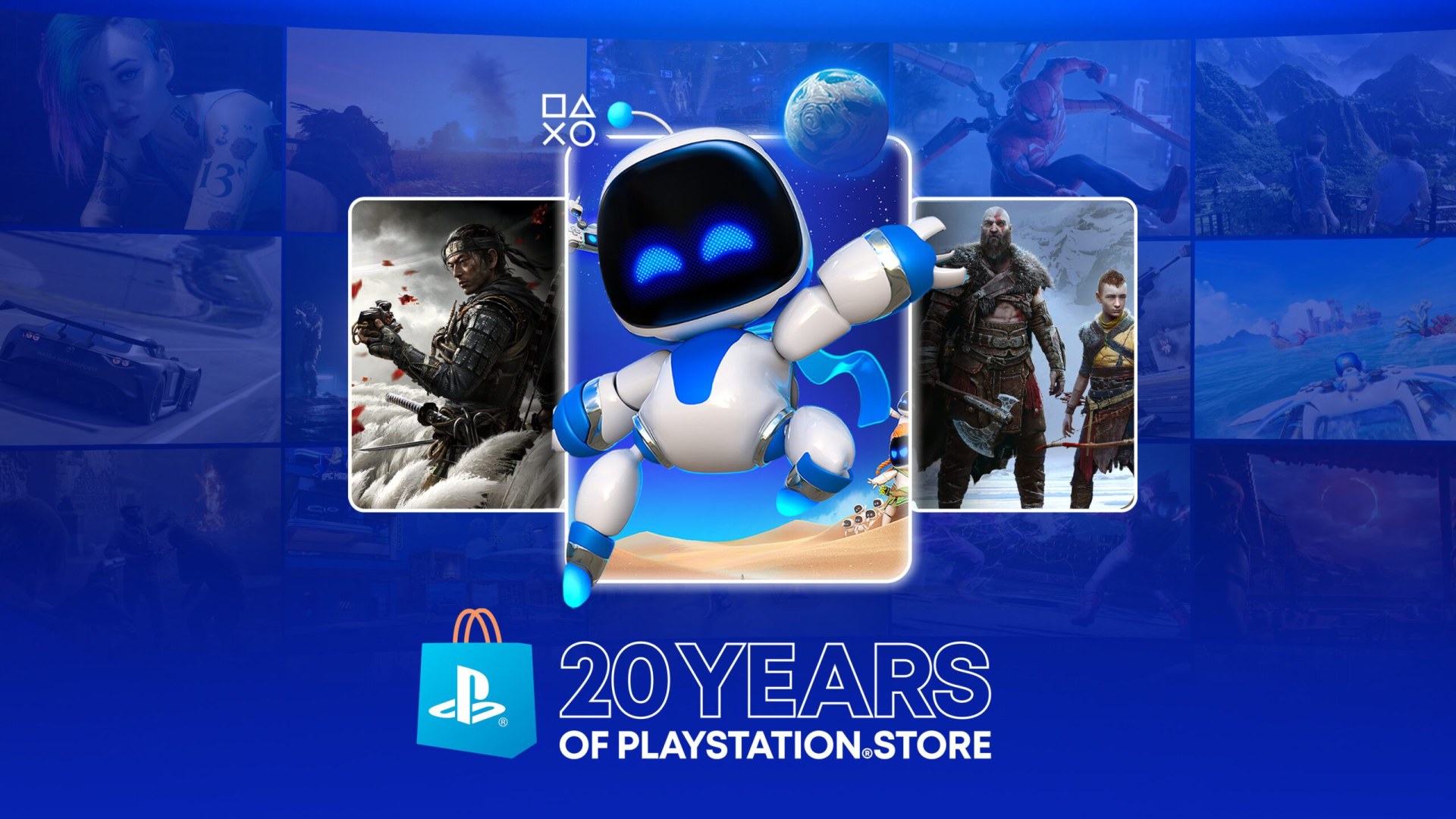
PlayStation is marking 20 years of PlayStation Store with a developer retrospective: creators from PlayStation Studios and other studios have named games that won them over in ways they didn’t expect. The selections range from a poker-inspired card game to high-speed action, quiet puzzle-platforming and sprawling role-playing adventures, making the feature less a ranking than a collection of different routes into a game.
The distinction matters. The developers weren’t asked to name their greatest games or even their personal favorites, but to recall titles they underestimated, approached with the wrong expectations or found unexpectedly affecting. For players, that makes the recommendations useful in a particular way: several explain what made them give a genre or style another chance.
The anniversary post also announced a 20 Years of PlayStation Store Showcase, scheduled to go live on November 18 at 11:00 a.m. local time. It was described as featuring game deals and a curated selection of hand-picked hits. The post doesn’t provide further details about the offers, so the developer picks are the more substantial part of the announcement.
Unexpected hooks, from cards to combat
Balatro (PS4 and PS5, 2024) caught the attention of Naoki Hamaguchi, director of the Final Fantasy VII Remake series at Square Enix. Its starting point is the familiar rules of poker, but Hamaguchi was drawn in by how progression and different combinations can send scores climbing. His reaction points to the appeal of seeing a simple premise become a series of increasingly satisfying decisions.
That is a different kind of surprise from Vanquish (PS3, 2010), which Sabotage Studio creative director Thierry Boulanger initially approached as a standard cover shooter. Instead, he found combat built around speed, bullet time and rocket-powered sliding. The contrast between that expectation and the actual pace is what stood out to him; his recollection is a reminder that the label attached to a genre doesn’t always describe how a game feels in motion.
Bloodborne (PS4, 2015) appears through the perspective of Masachika Kawata, a producer at Capcom. He singled out the game’s dark, unsettling setting, its carefully connected level design and the replayability that comes from returning to its challenges. He also highlighted the satisfaction of landing a gun parry at just the right moment. Kawata connected the atmosphere to classic Capcom games, while crediting the collaboration between FromSoftware and SIE Japan Studio for the experience he admired.
Inscryption (PS4 and PS5, 2022) also begins with an expectation that doesn’t hold for long. Arne Meyer, Naughty Dog’s head of culture and communications, thought he was getting a creepy tabletop-style card game. He enjoyed working through the interactions between cards and their modifiers, but the feature that most impressed him was the way each step opens up further layers of both play and story. Rather than spelling out the mystery, the game leaves room for players to piece it together themselves.
Meyer also mentioned a personal detail: a departed cat lives on in the game as the “lil toot boi” Build-a-Card. It’s a small, specific reason the game matters to him, alongside his appreciation of its design. His response shows how a game can surprise through both its systems and the meaning a player brings to them.
Stories that changed the first impression
Two developers chose God of War (PS4, 2018), but their responses focus on different parts of the same shift. Ramone Russell, director of product development communications and brand strategy at San Diego Studio, said he was struck by the game’s technical achievement on PlayStation 4. What changed his view most, though, was its treatment of Kratos. Where he had seen the character in the earlier trilogy as largely defined by anger, he found the 2018 game gave weight to fatherhood, grief, self-control, identity and the effort to break harmful patterns.
Sebastian Kalemba, game director at CD Projekt Red, described a more personal connection. Having loved the series from the beginning, he didn’t expect the 2018 story to resonate so strongly with him as a young father. Its focus on the bond between a father and son reached him in a way he hadn’t anticipated. Together, the two reactions suggest why the reboot’s story could work for both longtime followers and players who connected with its themes through their own lives.
Dragon Quest XI: Echoes of an Elusive Age (PS4, 2018) surprised Jonathan Burke, senior director of technology at Santa Monica Studio, with its charm and its willingness to upset expectations. He praised the story, characters and world, as well as the way apparent certainty about the road ahead can give way to a twist. His description frames it as a hero’s journey with a personality of its own, rather than simply a familiar fantasy quest.
Adrien Honvault, content director at Ubisoft, came to Yakuza: Like a Dragon (PS4, 2021) without having played an earlier Yakuza game. He had heard it could serve as an entry point, and ended up playing the series’ other games afterward. What won him over was the mix of mature themes, emotionally engaging characters and broad comedy. The combination, rather than any one element in isolation, made the series a lasting discovery for him.
Games that teach, move or stay with you
Inside (PS4, 2016) makes almost no use of the usual explanations players might expect: according to Insomniac Games creative director Marcus Smith, it has no user interface and no dialogue, and offers no obvious instructions. He admired how its design teaches through the environment instead, so that progress can feel intuitive rather than guided by explicit prompts. Its visuals and sound also support an ambiguous story that, in his view, lingers well after the ending.
That reliance on discovery sets Inside apart from games whose appeal is more immediately expressive. Sayonara Wild Hearts (PS4, 2019) was an unexpected fit for Santa Monica Studio game director Bruno Velazquez, who said musical and rhythm-driven games weren’t usually his first choice. The colorful presentation and changing settings drew him in, then the story and soundtrack kept him invested until he finished. His recommendation is aimed especially at players who might otherwise pass over a rhythm game.
Shadow of the Colossus, originally released for PS2 in 2005, stood out to Team Asobi studio director Nicolas Doucet. He described an adventure in which the player rides across open plains with a horse and sword, seeking giant creatures in an effort to save a loved one who has fallen into a deep slumber. Doucet emphasized the scale of the battles, the sense of loneliness and the music, along with the technical achievement he associated with the game. Its spare setup, as he remembers it, gives those encounters room to define the journey.
Housemarque creative director Gregory Louden picked Uncharted 2: Among Thieves (PS3, 2009), recalling that the finished game surpassed the excitement he already had after seeing its stage demo. The set pieces, production values and cast’s charisma made it feel to him like playing through a blockbuster film. That response is less about surprise at a genre than about a game delivering on high expectations—and then making the full experience feel even more expansive.
Across these picks, the common thread isn’t a particular platform generation or type of gameplay. It’s the gap between what someone expected to find and what the game actually offered: a deeper story, a more unusual combat rhythm, a personal connection or the satisfaction of learning without hand-holding. The list covers PS2, PS3, PS4 and PS5 releases, but it is presented as a set of personal discoveries, not a claim that every title is available on every current PlayStation system.
For PlayStation Store’s anniversary, that makes the retrospective a fitting companion to a showcase of curated hits: it puts the spotlight not only on the games themselves, but on the details that made experienced developers look twice.